


Stck Reader – Stories Your Way
Stck.me
I approached Stck Reader as a reading app rather than another general-purpose book library. Its focus is serial fiction: stories released in chapters, with the option to pay for individual chapters and support the writers behind them. That single idea changes the rhythm of reading. Instead of choosing one complete book and settling in for a long session, I can follow a continuing story in smaller visits and decide as I go whether it deserves more of my time.
That makes the app an interesting fit for readers who enjoy anticipation, cliffhangers, and discovering independent fiction one installment at a time. It is free to install, belongs to the Books & Reference category, and comes from Stck.me. My overall impression is positive, especially for someone who likes reading on a phone and does not want every purchase decision to be all-or-nothing. Still, the chapter-by-chapter model requires a little more spending awareness than a traditional ebook app.
Why chapter-based reading feels different here
The main capability is not simply displaying stories on a screen. It is the way serial fiction is organized around momentum. A chapter becomes a natural stopping point, so I can read during a commute, before bed, or while waiting for an appointment without feeling that I have abandoned a large book halfway through.
That structure also creates a different relationship with the writer. When a story is released in installments, each chapter carries more weight. A strong ending can make me eager to return, while a slower installment gives me a chance to pause before committing further. The app’s pay-per-chapter approach supports that choice directly: I can spend on the part I actually want to read rather than automatically buying an entire finished title.
In practical terms, this is best understood as a reading service built around ongoing attention. It is less like opening a shelf of conventional ebooks and more like following a stream of story episodes. The distinction matters because readers who love complete novels may find the pacing fragmented, while readers who enjoy regular narrative updates may find the format unusually convenient.
Related News

Why WhatsApp Messenger Still Makes Everyday Communication Feel Easy

Jurassic World: The Game Is the Better Dino Tycoon for Strategic Players

Threads in Real Life: Who Should Join, Lurk, or Leave

How SHEIN Turned Shopping Into an Endless Content Feed

How to Make Fortnite Feel Smarter on Mobile

Should You Switch to Microsoft Outlook on Mobile?
I also like the fact that the model gives the reader a visible role in supporting favorite writers. Paying for a chapter is not just a technical transaction; it can feel like a deliberate way to continue backing a story that has earned my interest. That said, the emotional appeal works only when the writing is strong enough to justify returning. The app can make access easy, but it cannot make every serial equally compelling.
What I would check before committing to a story
My advice is to treat the opening chapters as a trial period. Rather than paying immediately because the premise sounds attractive, I would first see whether the voice, pacing, and chapter endings work for me. Serial fiction depends heavily on consistency. A promising opening is useful, but the real test is whether each installment gives enough substance while still leaving a reason to continue.
This is one of the less obvious advantages of the format: it encourages active selection. In a conventional ebook purchase, I may spend more time deciding whether the whole book is worth buying. Here, the smaller commitment lets me judge the writing in stages. The trade-off is that a story can feel incomplete between chapters, so patience becomes part of the reading experience.
Gallery
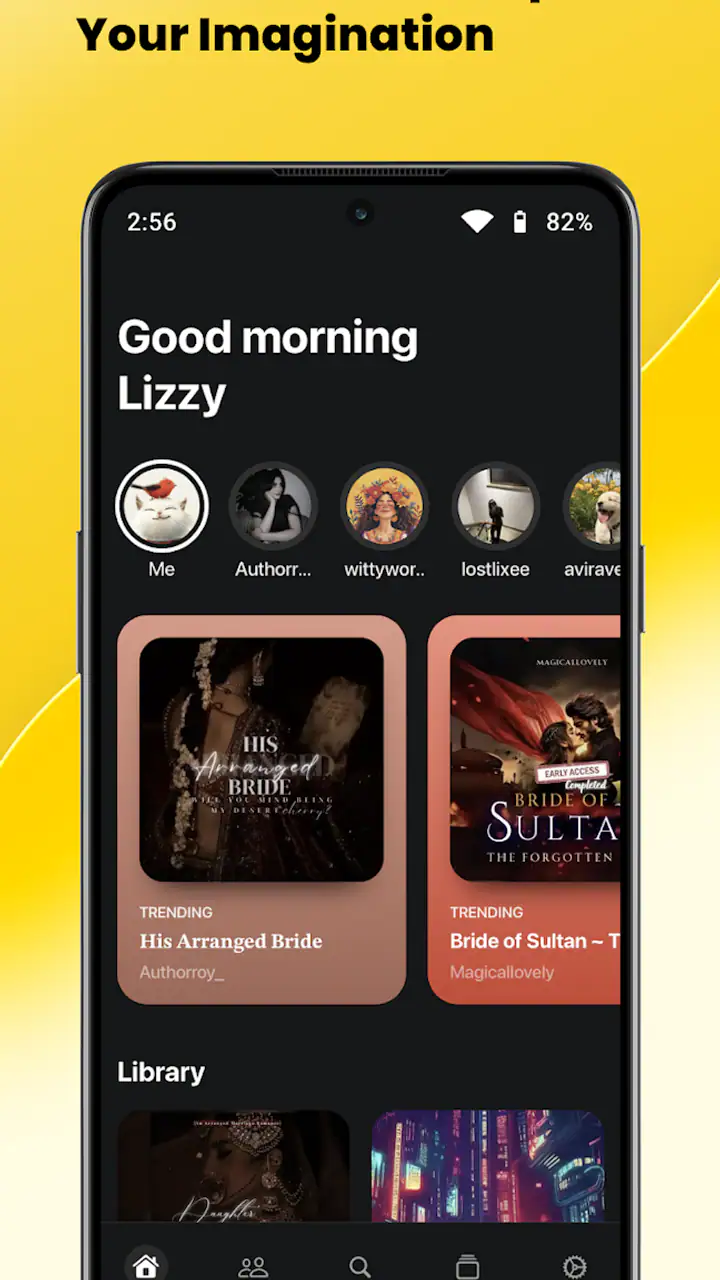
For readers who usually abandon long books because of busy schedules, short installments may be more approachable. I can build a reading habit around a single chapter rather than waiting for a free evening. On the other hand, anyone who prefers uninterrupted immersion should think carefully before choosing this format. The pauses that make serial reading convenient can also weaken the atmosphere of a story that would otherwise work better as one continuous volume.
Using the app in an everyday reading routine
Imagine that I have fifteen quiet minutes at lunch. With a standard ebook, I might open a novel, spend a moment remembering where I was, and then stop just as the plot becomes interesting. A serial-fiction app gives that short session a clearer shape. I can read one installment, reach its intended stopping point, and close the app without measuring progress by an arbitrary number of pages.
That workflow is particularly useful on a phone. The screen is not trying to replace a dedicated reading device; it is serving quick, repeat visits. I would use it when I want fiction close at hand but do not want to carry a full reading plan through the day. The smaller units also make it easier to switch between stories, although I would personally avoid following too many at once because the emotional continuity can become difficult to maintain.
A useful habit is to keep a simple mental budget for chapter purchases. The individual price may feel small in isolation, but serial reading can involve several decisions over time. Since in-app purchases range from $0.99 to $16.00 per item, I would look at the purchase prompt carefully before confirming anything. That range makes it especially important to distinguish between a low-cost next chapter and a larger item connected to a longer reading commitment.
This is also where Stck Reader differs from a subscription library. A subscription usually asks me to pay for broad access during a billing period, whether I read one title or many. Here, the emphasis is on selecting and paying for chapters. That can be better for a reader who follows only a few stories and wants direct support to reach particular writers. It may be less attractive for someone who reads constantly and expects a large catalog to be included in one recurring fee.
A practical approach to discovering what suits you
I would begin by choosing a story based on its premise, then read enough to evaluate three things: whether the chapter has a satisfying internal shape, whether the ending feels earned rather than artificially interrupted, and whether I actually want to spend time with the characters again. Those checks are more useful than judging a serial only by its cover or opening sentence.
I would also pay attention to my own reading pattern. If I tend to forget plots after a few days, serialized releases may require occasional backtracking or personal notes. If I enjoy discussing a story while it is unfolding, the slower, installment-based rhythm may be a strength. The app’s design concept is most valuable when the reader embraces the pause between chapters instead of treating it as an inconvenience.
Another practical tip is to separate discovery from purchasing. I would browse and sample first, then decide which stories deserve continued spending. That prevents the excitement of a dramatic opening from turning into an automatic series of purchases. It also gives me a clearer sense of which writers I genuinely want to support, rather than spreading small payments across titles I may never finish.
Where the model works best—and where it creates friction
The strongest use case is casual but committed reading: someone who wants fiction in manageable pieces and enjoys returning to a story repeatedly. It is also a good match for readers who like emerging voices and prefer supporting a writer directly through their reading choices. The app’s purpose feels clearest when the chapter itself is treated as a meaningful creative unit, not merely a slice removed from a much longer book.
I would be more cautious if I wanted a traditional reference tool, a broad nonfiction collection, or a quiet reading experience with no purchase interruptions. Although the app sits in Books & Reference, its identity is clearly centered on fiction delivered serially. A conventional ebook reader may be better for complete books, local files, extensive annotation, or uninterrupted long-form study. Those needs are not the reason to choose this app.
The payment structure is the biggest point of friction for me. Paying per chapter can feel fair because the commitment is gradual, but it can also make the total cost harder to judge at the beginning of a long story. I would prefer to know my own limit before I start. The free entry point is helpful for exploring, yet “free” does not mean every part of the reading journey is included.
There is also a creative trade-off in serialized pacing. Writers may end chapters with strong hooks, which keeps the experience lively, but repeated cliffhangers can become tiring if the story does not provide enough development between them. I would judge each title individually rather than assuming the app’s format guarantees a satisfying result. A good serial balances immediate progress with future suspense; a weak one can feel like it is always postponing the payoff.
The Teen content rating is another useful signal for families and younger readers. I would not treat that label as a substitute for checking the specific story, since different fiction can appeal to different maturity levels even within the same broad rating. Parents deciding whether to recommend the app should consider the individual titles their child wants to read and the possibility of in-app purchases.
Questions I would settle before a longer reading session
Would I need to pay to try it? The app itself is free, which makes initial exploration straightforward, but in-app purchases are available. I would therefore browse first and confirm the cost of any chapter before buying. That approach keeps the free starting point useful without confusing it with unlimited access.
Is it suitable for a quick daily habit? Yes, that is where the format makes the most sense to me. The chapter structure supports short visits and gives each session a natural boundary. It is less convincing as a replacement for every kind of reading, especially when I want a complete book in one uninterrupted sitting.
Can it replace a normal ebook app? Not for my needs. I would choose a conventional ebook reader for finished novels, long study sessions, or a library organized around books rather than installments. I would choose Stck Reader when the appeal is following serial fiction and deciding gradually which stories and writers deserve my attention.
Is it a good choice for heavy readers? It depends on how they prefer to pay. A frequent reader who wants unlimited access may find chapter purchases less predictable than a subscription or library service. A heavy reader who follows a small number of favorite serials may appreciate the more selective model, particularly when supporting individual writers matters.
Does the app feel established enough to try? It has reached over one hundred thousand installs and holds a 4.8 average from around nine hundred ratings, which suggests that many users have responded well to its approach. I would still base my decision on whether serial fiction fits my habits rather than treating popularity as proof that every story will suit me.
Who gets the most from Stck Reader
I would recommend it to readers who enjoy discovering fiction in stages, checking in often, and making deliberate choices about which chapters to purchase. It is especially appealing if you like cliffhangers, independent storytelling, and the feeling of being part of a story’s ongoing journey. The ability to support favorite writers gives the reading decision a little more meaning than simply opening another title in a crowded library.
I would not make it my first recommendation for someone who wants a single payment, a complete narrative, and no interruptions. It is also not the best fit for readers looking for a serious study platform or a conventional collection of reference books. The app’s strength is narrow in a good way: it concentrates on serial fiction instead of trying to be every kind of reading tool.
On the technical side, the current version is 1.1.47 and it requires Android 9 or later. That makes the compatibility question fairly simple for Android users: check the device’s operating system before installing, particularly if the phone is older. The app is rated for Teen audiences, and the purchase range means I would involve a parent or account holder where appropriate rather than treating every in-app prompt as a minor tap.
My final view is that Stck Reader succeeds when I use it on its own terms. It is not merely a smaller ebook shelf; it is a way to follow fiction through chapters, pause naturally, and reward the writers whose work keeps me coming back. The best experience comes from sampling carefully, setting a spending boundary, and choosing stories whose installment structure feels satisfying. If that sounds like the way you already like to read, I think this free app is worth exploring. If you want complete books with predictable access, another reading option will probably serve you better.
FAQs for Stck Reader – Stories Your Way
What is Stck Reader – Stories Your Way?
Stck Reader – Stories Your Way is a reading app designed to give users a more flexible way to discover and enjoy written stories. It focuses on presenting content in a clean, reader-friendly format, making it easier to browse different titles, open a story, and continue reading at your own pace. The exact selection of available stories may vary by region and app updates.
Is Stck Reader – Stories Your Way free to download and use?
The app may be available to download at no initial cost, but some content or features could depend on the developer’s current business model. Before installing, users should check the Google Play Store or Apple App Store listing for information about subscriptions, in-app purchases, advertising, or premium access. Pricing and included features can change over time, so reviewing the latest store details is recommended.
Does Stck Reader support offline reading?
Offline availability depends on how the app handles individual stories and whether it provides a download or saved-reading option. During testing, users should look for controls such as Save, Download, Library, or Read Offline after opening a title. If no such option is shown, an internet connection may be required to load stories, images, account data, or updated content.
Can I personalize the reading experience in Stck Reader?
Stck Reader – Stories Your Way is intended to make reading feel adaptable, although the exact customization tools depend on the installed version. Users should check the settings menu for options such as text size, display theme, brightness, scrolling style, notifications, or reading preferences. Some personalization features may only be available for selected content or on certain devices and operating systems.
Is Stck Reader – Stories Your Way safe for children and private to use?
Parents should review the app’s age rating, privacy policy, permissions, and available story categories before allowing children to use it. Reading platforms can include user-generated, mature, or externally linked content depending on their catalog. Users should also understand what information may be collected, such as account details, usage data, or device identifiers, and adjust privacy settings where available.
Pros
- Clean
- distraction-free interface for comfortable reading sessions.
- Personalized story recommendations help users discover new content.
- Supports multiple reading preferences and adjustable text settings.
- Story library is easy to browse
- with genres clearly organized.
- Convenient for reading short stories during commutes or breaks.
Cons
- Some stories or features may require an account or subscription.
- Content availability can vary by region and language.
- Recommendations may feel limited until the app learns your tastes.
- Offline reading options may not be available for every story.
- Frequent readers may find the library smaller than major reading apps.


